

Hotel marketing advice is everywhere. Most of it is technically correct and strategically incomplete.
Be omnichannel. Invest in social media. Focus on personalization. Build loyalty.
Yet many hotels still struggle with inconsistent occupancy, rising customer acquisition costs, and an overreliance on third-party booking platforms. The issue is rarely effort. It is structure.
In 2024, effective hospitality marketing strategies for hotels are built around connected systems, not isolated tactics. Hotels that perform well align visibility, booking experience, and guest engagement across the entire journey.
At Sidekicks, we evaluate hotel marketing through a simple question:
Does this move a guest closer to booking or returning?
This guide introduces a practical framework hotels can use to answer that question and build marketing systems that drive measurable results.
This article is written by a hospitality marketing practitioner, not an anonymous contributor or AI-generated content mill.
The strategies outlined here are informed by direct experience working with hotels, restaurants, and hospitality brands on SEO, paid media, content marketing, and lifecycle engagement. The goal is not to repeat surface-level best practices, but to translate them into systems that work within real operational constraints.
Rather than treating marketing channels as standalone initiatives, high-performing hotels design around what we call the Connected Guest Funnel.
This framework reflects how modern travelers actually discover, evaluate, book, and return to hotels.
Most hotel marketing breakdowns happen between these stages. Visibility without evaluation support. Bookings without retention strategy. Campaigns without follow-through.
The most effective hotel marketing techniques are not defined by novelty. They are defined by focus and connection.
Hotels that consistently outperform their compsets tend to prioritize:
A common misconception is that more channels equal better results. In practice, most underperforming hotels are spread too thin. The strongest performers concentrate effort where it compounds.
Traditional hotel marketing still matters, but only when it connects to a digital outcome.
Print placements, event sponsorships, local partnerships, and in-property signage create awareness. Digital marketing captures, reinforces, and converts that awareness.
An effective integrated approach looks like this:
When traditional marketing does not create a next step, it becomes an expense rather than a growth lever.
Promotional campaigns that perform best are not the deepest discounts. They are the most clearly positioned.
High-performing hotel promotions share three characteristics:
Examples include:
Heavy discounting often signals uncertainty rather than value. Strong positioning consistently outperforms aggressive price cuts.
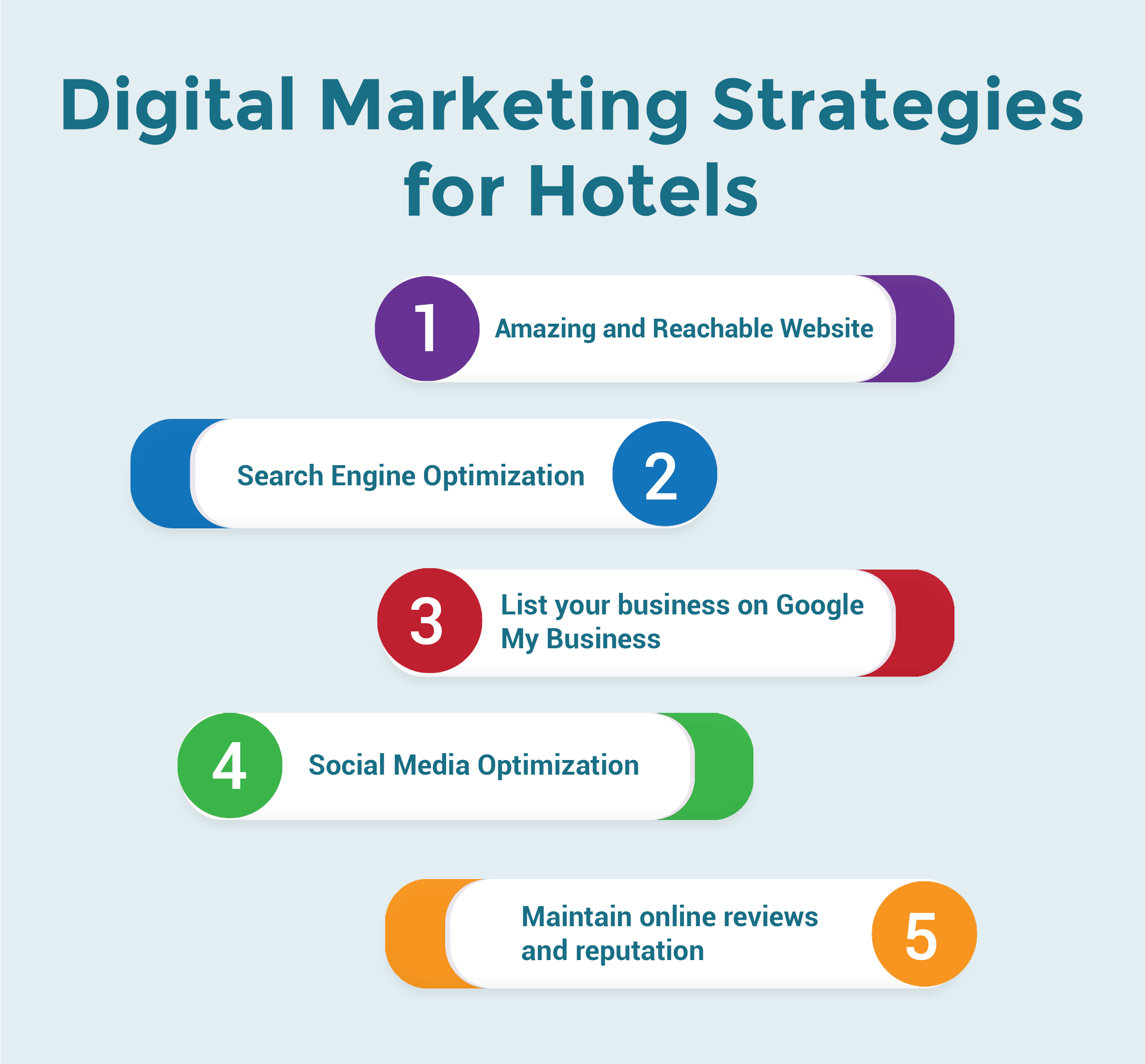
Digital marketing is where hotels either build leverage or quietly lose margin.
Search engines, paid ads, and social platforms shape guest perception long before a booking engine loads. A strong digital presence ensures your hotel appears during high-intent moments and remains competitive during evaluation.
Digital marketing gives hotels control over:
Hotels that invest in digital visibility reduce reliance on OTAs and strengthen long-term revenue stability.
SEO is one of the most underutilized revenue drivers in hospitality marketing.
Many hotels approach SEO as a technical checklist instead of a demand-capture strategy. Effective hotel SEO focuses on intent.
Best practices include:
Content that performs well includes destination guides, local event calendars, itineraries, and comparison-style pages. When content supports the evaluation stage, it increases both rankings and conversion rates.
Paid advertising and email marketing are most effective when they work together.
Paid media performs best when focused on:
Email marketing performs best when it supports the guest lifecycle:
Hotels that automate lifecycle communication consistently outperform those relying on manual blasts, even with smaller lists.
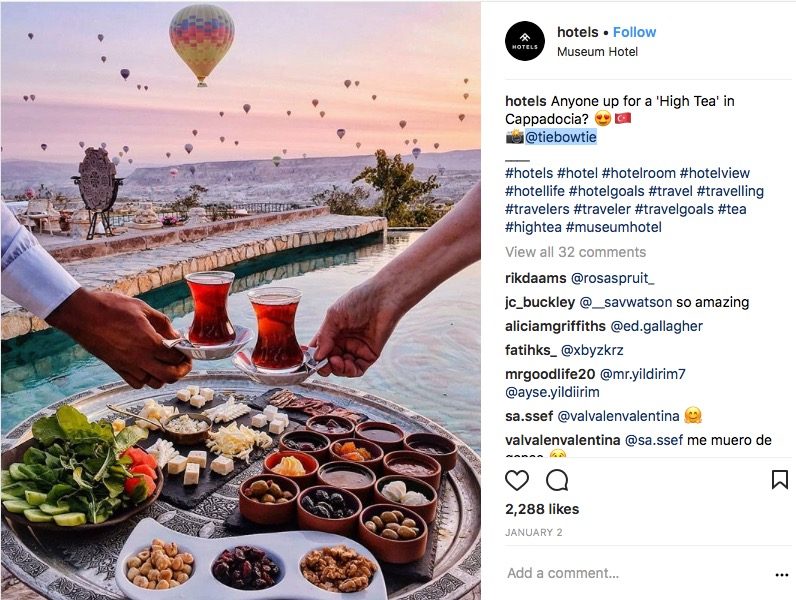
Most hotel social media content looks polished. Much less of it drives action.
Effective hotel social strategies focus on:
Short-form video is especially effective for discovery and emotional engagement. It communicates atmosphere, not just amenities.
A useful filter: if content cannot be tied to discovery, evaluation, or retention, it is unlikely to deliver business impact.
Platform effectiveness depends on guest profile, not trends.
In most cases:
Strategic platform selection consistently outperforms broad, unfocused presence.
Influencer marketing works best when it feels authentic and relevant.
Micro-influencers and niche travel creators often generate higher engagement and trust than large accounts. User-generated content is even more powerful because it reflects real guest experience.
Hotels that actively collect and reuse guest content improve evaluation-stage confidence and reduce booking friction.
Guest engagement should extend beyond check-in and checkout.
High-performing hotels design engagement across:
When marketing supports operations and experience, loyalty becomes a natural outcome rather than a forced program.
Personalization is expected, not optional.
Simple actions like referencing past stays, recommending relevant amenities, and timing communication appropriately can significantly improve engagement and repeat bookings. Relevance matters more than complexity.
Loyalty programs fail when they focus on points instead of behavior.
Effective programs reward engagement, reinforce brand identity, and offer experiential value. Feedback systems close the loop by improving operations and signaling that guest opinions matter.
Marketing performance should be evaluated across the entire guest funnel, not just at booking.
Hotels that review performance consistently and adjust quickly gain compounding advantages over competitors.
Tracking fewer metrics consistently is more effective than tracking everything inconsistently.
Most hotel marketing does not fail because of poor ideas. It fails because of fragmentation.
Hotels that align visibility, experience, and retention through a connected system build stronger bookings, healthier margins, and more resilient brands.
Your business deserves marketing that supports growth instead of creating more work. Whether you’re trying to stay consistent, planning something new, or looking to scale what’s already working, Sidekicks helps take execution off your plate with a clear, dependable process.
If it makes sense, we’ll talk through your goals and see how we can help.
Book a free 30-minute discovery call to walk through where you are, where you want to go, and whether working together is the right next step.
