Guide
Klaviyo Flows: What to Build First
Which flows to build first, what happens when one subscriber qualifies for two at once, and how to tell which flow is earning.
Which flows to build first, what happens when one subscriber qualifies for two at once, and how to tell which flow is earning.
Most Klaviyo accounts have a welcome flow, an abandoned cart flow somebody set up once, and a list of thirteen more Klaviyo flows that everyone recommends and nobody has built.
Leaving them unbuilt is often the right call, because a store running four flows well earns more than a store running twelve badly. What it costs you is picking the wrong four. Flows send to people who already know you, at the moment they were thinking about you, which is why they earn more per send than anything you schedule. Get the order wrong and you spend a month on the sequence that was never going to carry the revenue.
So the useful question is which three or four to build first, how they behave once they're all running together, and how to tell which one is earning its keep.
This covers the five ways a flow starts, and the four worth building before anything else. Then what happens when one subscriber qualifies for two of them at once, and how to read the numbers afterwards.
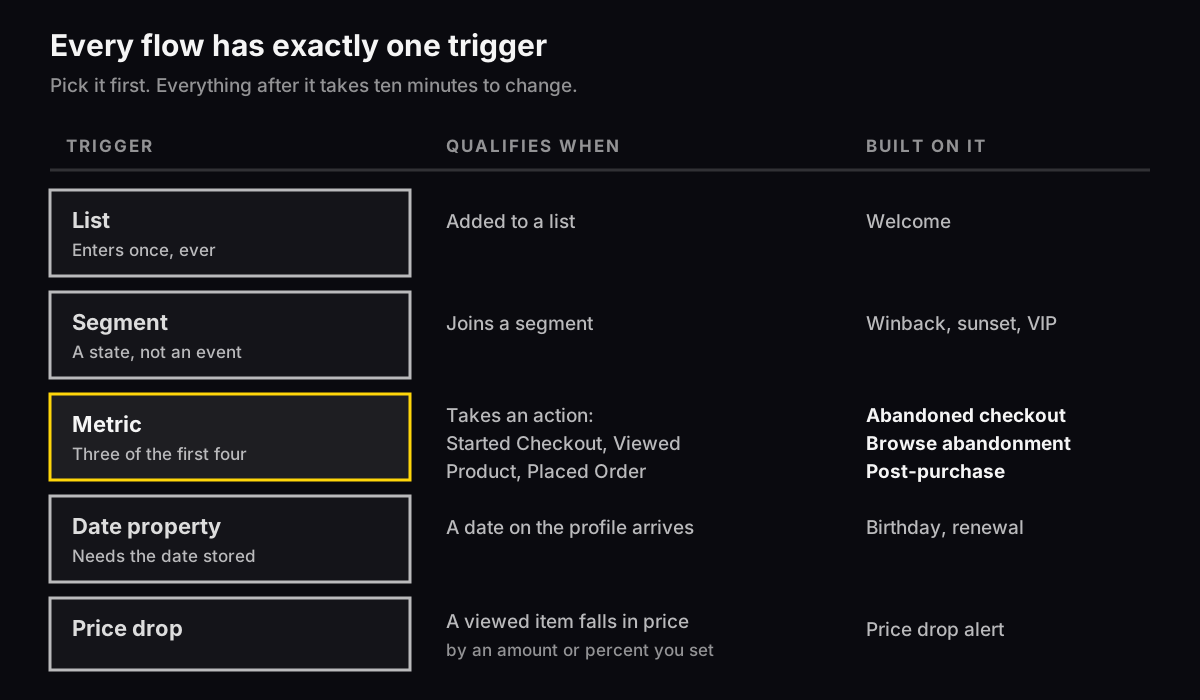
Klaviyo gives every flow exactly one trigger, and there are five kinds to pick from.
List-triggered. Someone gets added to a list. This is what a welcome sequence runs on, and a profile enters a list-triggered flow one time.
Segment-triggered. Someone joins a segment, which means they now match a rule you wrote. Useful when the entry condition is a state rather than an event, like "has bought twice and not in ninety days."
Metric-triggered. Someone does something. Placed Order, Started Checkout, Viewed Product. Most of the money in a Klaviyo account runs on this one.
Date property-triggered. A date sitting on the profile comes around. Birthdays, renewal dates, warranty expiry.
Price drop-triggered. Something a person viewed or started checkout with drops in price by an amount or a percentage you set.
Picking the trigger is the whole design decision. Everything after it, the filters and the delays and the copy, is adjustable in ten minutes. The trigger decides who the flow is for.
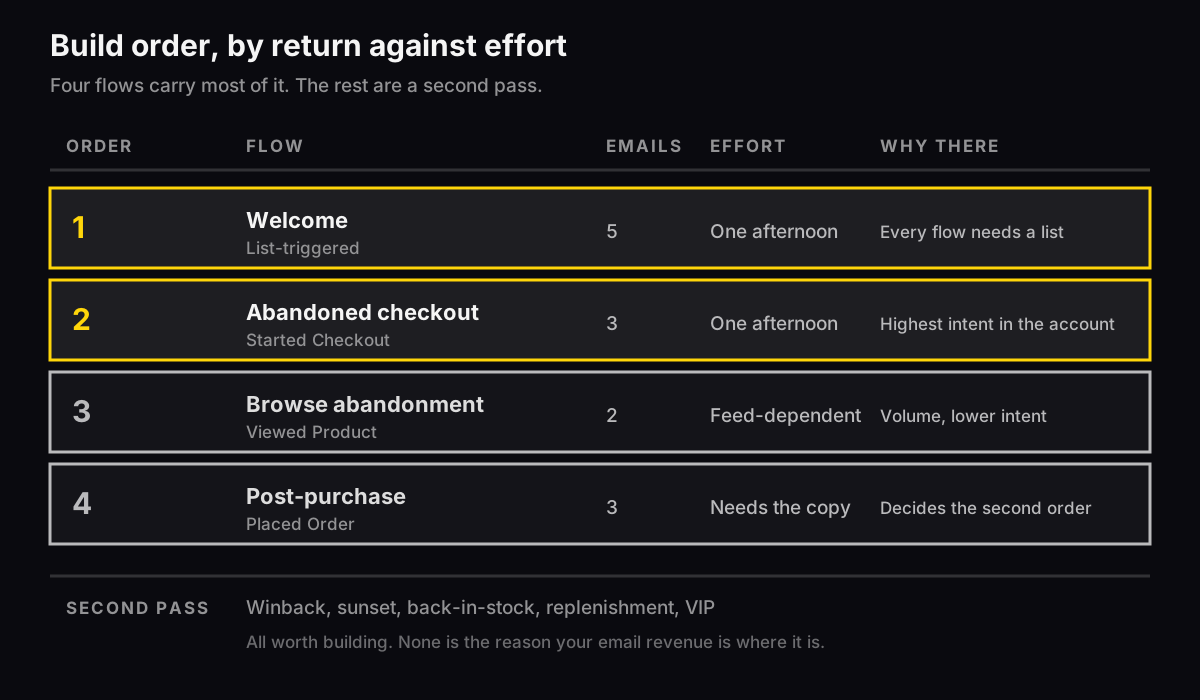
Ordered by what they earn against what they cost you to build, not by how interesting they are.
1. Welcome, list-triggered. Every other flow needs traffic that's already opted in. This one turns a signup into a first order, and the people in it asked to hear from you minutes ago. Five emails over nine days covers it, and we wrote the whole build in a separate Klaviyo welcome flow playbook.
2. Abandoned checkout, metric-triggered on Started Checkout. These people gave you an email address and a cart. The intent is as high as it gets in an ecommerce account, and the flow is three emails and an afternoon.
3. Browse abandonment, metric-triggered on Viewed Product. Lower intent than a cart, higher volume than everything else. Two emails. Build it third because it needs your product feed working, and that's the part that goes wrong.
4. Post-purchase, metric-triggered on Placed Order. The one people skip, and it's the flow that decides whether a first order becomes a second one. Shipping expectations, how to use the thing, then a review request once it's arrived.
That's the set. A store running those four well earns more than a store running twelve of them badly. A twelve-flow account with four of them working is a common thing to inherit.
Everything else is a second pass. Winback for lapsed customers, a sunset flow for people who stopped opening, back-in-stock, replenishment for consumables, and a VIP flow once you know who your VIPs are. All worth building, and none of them is the reason your email revenue is where it is.
Here's the part the fifteen-flow lists tend to skip, and it's the one that bites.
Someone signs up through your popup, browses three products, adds one to a cart, and leaves. They're now sitting in a welcome flow, a browse abandonment flow, and an abandoned checkout flow, and all three want to send.
Klaviyo has no priority setting. There's no field where you rank one flow above another and let the platform sort it out, and its own documentation on triggers describes no such thing. What you get instead is two controls, and they do different jobs.
Flow filters decide whether someone still belongs in a sequence, and they re-check before every single send. A flow filter of Has Placed Order at least once since starting this flow, set to zero times, pulls a buyer out of a nurture sequence the moment their order lands. Put one on every flow except post-purchase.
Smart Sending caps how often any one person hears from you at all. You'll find it on each message under Skip recently emailed profiles, and the default window runs 16 hours for email, 24 for SMS and push. Leave it on everywhere except the first email of a welcome sequence, which has to arrive whatever else went out that day.
Between them, that's your collision handling, and there is no third control. The order people receive your emails in follows from how you set those filters, so it's worth drawing your four flows on one timeline before you turn them all on.
This is the question that decides what you do next month.
Klaviyo reports revenue per flow. Open that view once a month and read three things across all your Klaviyo flows.
Revenue per recipient, per flow. Total revenue attributed to the flow, divided by how many people received it. It's the number that survives across flows of wildly different sizes, and it tells you which sequence to rewrite first.
Each flow's share of total flow revenue. In most accounts this is lopsided. One or two flows carry it, and the rest round to nothing. That's normal, and it tells you where an afternoon is worth spending.
Flow revenue against campaign revenue. Flows send to fewer people and earn more per send, because they arrive when someone is already thinking about you. If your campaigns are out-earning your flows by a wide margin, the flows are underbuilt.
Read all three at thirty days rather than seven. A welcome sequence running nine days needs a full cycle before the last email has any data behind it.
One caution on attribution. Klaviyo credits a sale to a flow using its own attribution window, which is the stretch of time after a send during which it will still count an order. Someone who got a flow email and a campaign in the same week shows up in both. That's fine for deciding which flow to work on, and it's why these numbers won't reconcile with what your store reports.
A flow that stops working looks exactly like a flow that's working, right up until you read the numbers, and four things cause most of it.
The integration disconnects. A reauthorisation lapses and metric-triggered flows stop firing, because nothing is sending Klaviyo the events. Nothing errors and nothing alerts you. The flow goes quiet.
The product feed goes stale. Browse and cart flows render products dynamically. Discontinued items and dead image URLs show up as gaps in the email long before anyone tells you.
The discount code expires. A welcome flow offering a dead code reads worse than one with no offer at all. It survives for months, because nobody re-enters the flow to check.
The copy ages. Seasonal references, a product you stopped selling, a founder story from two rebrands ago.
Put a recurring thirty minutes in the calendar. Send yourself through each live flow, click every link, check every code. It's dull and it pays for itself the first time it catches something.
Build the welcome flow and the abandoned checkout flow. Two afternoons, and between them they'll cover most of what flows are going to earn you this quarter.
Add a flow filter on Has Placed Order at least once since starting this flow to both, turn Smart Sending on, and leave them alone for thirty days. Then read revenue per recipient on each and decide whether the next afternoon goes to browse abandonment or to rewriting whichever of the two came back weaker.
If you'd rather have someone look at what you've already got, we run a free teardown and send it back in two business days. Our email marketing service builds and maintains Klaviyo flows for brands who'd rather not. If your signup forms are what's holding back list growth, that's website design work rather than email work. Choosing who does it is a separate question, and we wrote how to choose a marketing agency for that.
Welcome, abandoned checkout, browse abandonment, and post-purchase, in that order. Welcome comes first because every other flow needs a list that has opted in. Abandoned checkout is second, because the intent is as high as it gets in an ecommerce account. Both take about an afternoon. Browse abandonment is third because it depends on your product feed, and post-purchase fourth because it needs copy rather than configuration. A store running those four well earns more than a store running twelve of them badly.
Nothing arbitrates between them, because Klaviyo has no flow priority setting. Someone who signs up, browses, and abandons a cart is sitting in three flows at once, and all three want to send. You control that with two things. Flow filters re-check before every send and pull people out of a sequence they no longer belong in. Smart Sending, under Skip recently emailed profiles, caps how often any one person hears from you at all, with a default window of 16 hours for email.
Klaviyo reports revenue per flow. Read revenue per recipient for each one. That's total revenue attributed to the flow divided by the people who received it, and it holds up across flows of different sizes. Then read each flow's share of total flow revenue, which is lopsided in most accounts, and flow revenue against campaign revenue. One caution: Klaviyo credits a sale using its own attribution window, which is the stretch of time after a send during which it will still count an order. These numbers will not reconcile with what your store reports.
Four is enough to start. Welcome, abandoned checkout, browse abandonment, and post-purchase cover most of what flows will earn you, and the rest are a second pass: winback, sunset, back-in-stock, replenishment, and VIP. Building all fifteen at once produces fifteen flows nobody maintains. Build four, leave them for thirty days, then read the numbers and decide where the next afternoon goes.