Guide
LLM SEO for Ecommerce Stores
Where an AI answer's citations come from, what to change on your store, what to do off it, and how to measure LLM SEO without buying a tool.
Where an AI answer's citations come from, what to change on your store, what to do off it, and how to measure LLM SEO without buying a tool.
Someone who wants what you sell opens ChatGPT instead of Google. They type "best merino base layer for winter running" and get four paragraphs naming five brands, with a handful of links underneath. Winning one of those links is what LLM SEO means.
If you're one of the five, you got a customer who never saw a search results page. If you aren't, nobody tells you the question was asked. Nothing about it appears in any report you read today.
That's the gap, and most of what's written about closing it is written for software companies with a blog. A store is a different problem, because that answer almost never cites a store. It cites the roundup that named the store.
So this covers where the citation comes from, and what to do on your own site and off it. Then how to tell whether any of it worked, without buying a tool for the privilege.
An assistant answering a shopping question does something close to this. It reads the question, goes and reads a handful of pages it thinks are relevant, and writes an answer out of what those pages say, linking to some of them.
The important part for a store is the middle step. Rather than remembering your brand, the model is reading pages, right then, and most of what it reads for a product question is not a product page. They're roundups, reviews, comparisons, forum threads, and the occasional retailer.
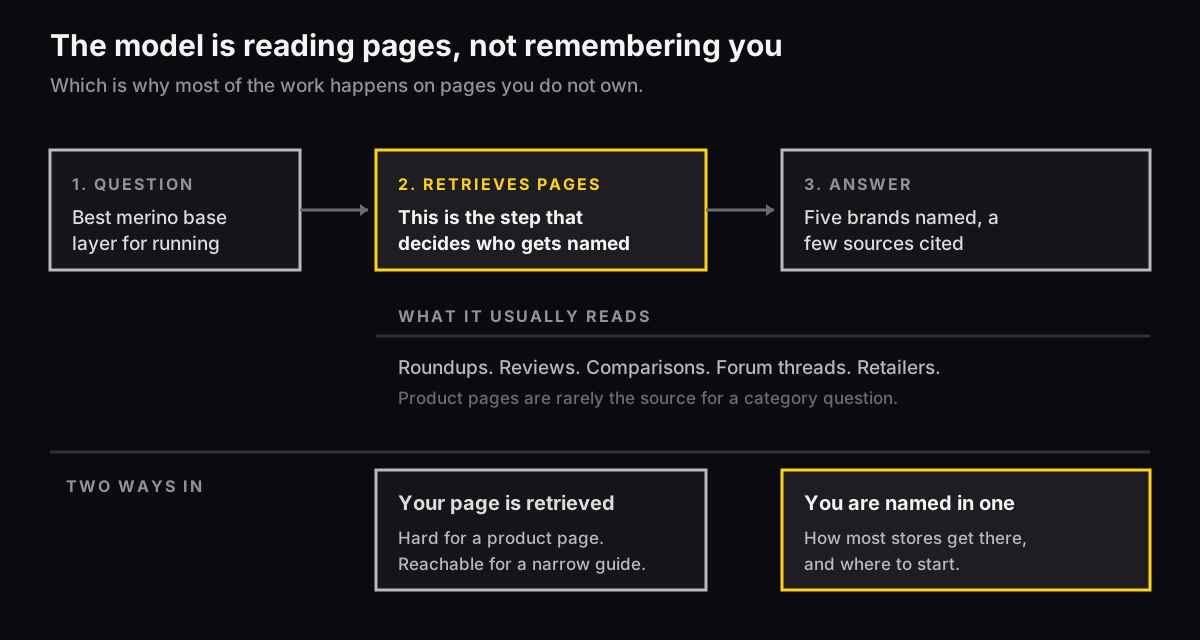
So there are two ways into that answer. It reads your page and links to it, which is hard for a product page and reachable for a guide that answers a question properly. Or it reads somebody else's page and your brand is named inside it, which is how most stores get there. Both are worth doing, and they are different work.
Google has said its AI features are built on the same ranking and quality systems as normal search, and that the same SEO practices still apply. When an assistant looks something up, it is choosing among pages that already rank.
Which means the unglamorous answer is the true one. A page that ranks nowhere gets read by nothing. None of it stopped mattering: site speed, pages a search engine reaches and reads without tripping over, a page that answers its question, and links from real sites.
Treat everything below as what you do after the fundamentals rather than instead of them. If your product pages take six seconds to load, that's the first job, not this.
The unit an assistant lifts is a passage, not an article. A passage is a chunk that makes sense pulled out on its own, without the paragraph before it. That changes how a page gets built.
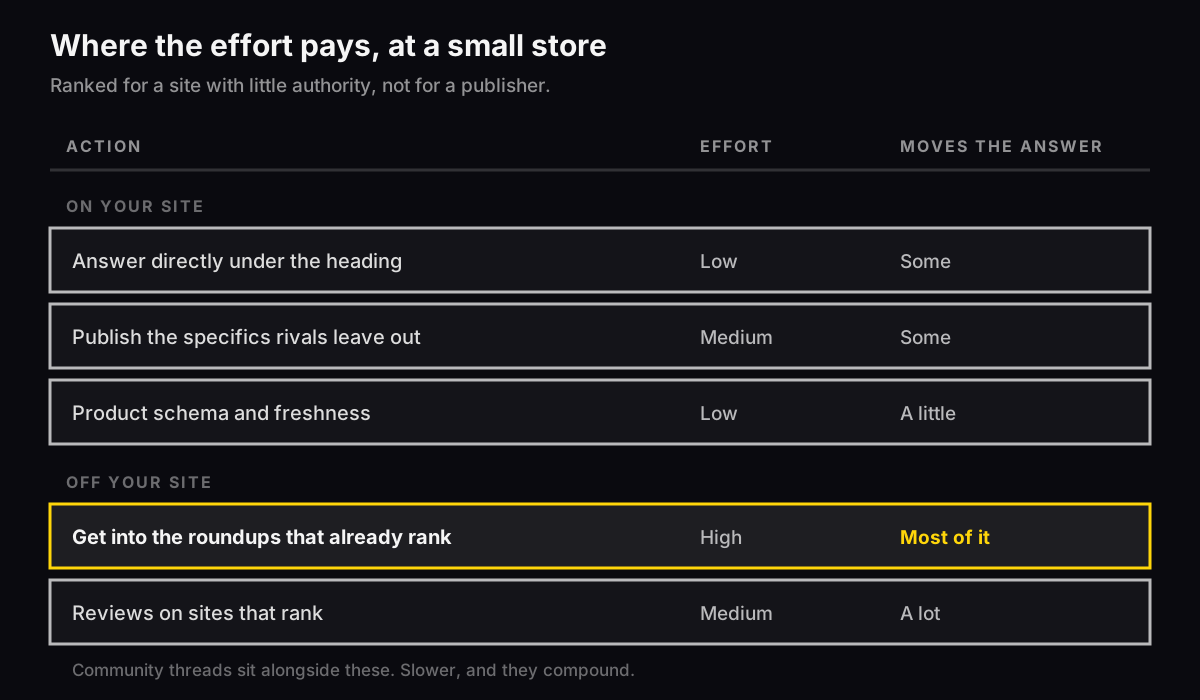
Put the answer directly under the question. An H2 phrased the way a buyer asks it, then the answer in the first two sentences underneath, with the depth after it rather than before.
Make each section survive being quoted alone. A paragraph that needs the three above it for context will not get quoted. Name the subject in the sentence rather than leaning on "it" and "this."
Say the specifics. Materials, weights, dimensions, care instructions, what it fits and what it doesn't. A model writing a comparison needs facts to compare, and the store that publishes them is the one that gets described accurately.
Keep it current. A page dated three years ago competes with one updated last month for the same slot in an answer.
Add product schema. That is a small block of code in the page, stating your price, availability and rating in a fixed format. A machine reads them off without working out your layout.
This is the part written for stores rather than for software companies, and it's where most of the movement is.
Work out which pages an assistant reads for your category, by asking it. Type the question your buyer would type, look at what it cites, and write that list down, because it is your target list.
Get into the roundups that already rank. The "best merino base layers" article on page one is one of the pages an assistant reads. Being named in it is worth more than any change to your own product page.
Get reviewed by people who publish. A real review on a site that ranks is another page an assistant reads.
Be findable where people ask each other. Forum threads and community answers get read too, and a brand that appears in them repeatedly gets named.
Keep your own comparison content honest. A page comparing your product to real alternatives gets used when it reads like an assessment. A page comparing your product to two weaker options nobody was considering does not.
There's no rank tracker for this. Search Console does not report ChatGPT, and the tools that do measure it are mostly paid, so here's the version that costs nothing.
Ask the models, on a schedule. Write down the ten questions a buyer would type. Once a month, ask each one in each assistant your customers use, and record which brands get named and which pages get cited. Keep it in a spreadsheet with the date. Over a few months that spreadsheet tells you how often you get named compared with everyone else, which is the thing the paid tools sell, done by hand.
Watch referral traffic. Sessions arriving from assistant domains show up in your analytics as referrals. The numbers are small and the trend is the point.
Watch branded search. Someone who hears your name in an AI answer often searches for it afterwards. A rise in branded search with no campaign behind it is a signal that something named you.
Read all three quarterly rather than weekly, because this moves slowly.
Worth being straight about this, because most guides on the subject are not.
A store with little search authority is unlikely to be cited directly for a competitive category question any time soon. The pages winning those citations are established publishers and large retailers.
What is reachable is the second route. Being named inside the roundups and reviews that already rank, and being cited directly on the narrow questions where competition is thin. Those are usually the specific ones about your own product type, materials or use case.
So the honest sequence is to fix the fundamentals, publish specific pages on the narrow questions, and spend real effort getting into other people's pages. Getting linked to directly on the big category questions comes later, if it comes.
Write down the ten questions a buyer would type into an assistant. Ask each one, and record which brands get named and which pages get cited.
That list does two jobs. It's your baseline for measurement, and it's your outreach target list, because the pages being cited are the pages to be in.
Then pick the three narrowest questions on the list and write a specific page for each, with the answer directly under the heading.
If you'd like a second read on where you show up today, we run a free teardown and send it back in two business days. Our AEO service runs this as a programme and our ecommerce SEO service covers the fundamentals underneath it. If you're weighing whether to hire for this at all, we wrote how to choose a marketing agency.
An assistant reads the question, goes and reads a handful of pages it thinks are relevant, and writes the answer out of what those pages say. So the links under the answer come from whichever pages it read, and for a product question those are usually roundups, reviews, comparisons and forum threads rather than product pages. That gives a store two ways in. It reads your page and links to it, which is hard for a product page and reachable for a narrow guide that answers a question properly. Or it reads somebody else's page and your brand is named inside it, which is how most stores get there.
There is no rank tracker for this and Search Console does not report ChatGPT, so do it by hand. Write down the ten questions a buyer would type. Ask each one in each assistant your customers use, once a month, and record which brands get named and which pages get linked to. Over a few months that spreadsheet tells you how often you get named compared with everyone else, which is the thing the paid tools sell. Alongside it, watch your analytics for visits arriving from those assistants, and watch searches for your own brand name, because someone who hears you named in an answer often looks you up afterwards.
Write in chunks that make sense on their own. Put the answer directly under a heading phrased the way a buyer asks it, with the depth after rather than before, because a paragraph that needs the three above it for context will not get quoted. Publish the specifics rivals leave out, since a model writing a comparison needs facts to compare. Keep pages current, and add product schema, which is a small block of code stating your price, availability and rating in a fixed format so a machine reads them off without working out your layout.
Not for a competitive category question, and it is worth being straight about that. The pages getting linked to on those are established publishers and large retailers. What is reachable is being named inside the roundups and reviews that already rank, and getting linked to on the narrow questions where competition is thin. Those are the specific ones about your product type, materials or use case.